
In the last blog I introduced the vision of the Ladybridge Trivium. This blog focuses on the key steps on our journey.
Firstly, a reminder that our Trivium involves the three pillars listed below:
- KNOWLEDGE – Learn something new from an expert, this includes experts beyond school.
- EXPLORATION – Debate, discuss, form your own ideas and gain authentic, real world experiences.
- COMMUNICATION – Communicate your ideas to others, and perform publicly, in different ways to a variety of audiences.
More detail on our Trivium philosophy can be found here.
When I started at the school, we co-constructed our core beliefs, our mission and the qualities we seek to develop in our learners. We call all of this stuff, and the Trivium, The Ladybridge Way. The Trivium is the means by which we seek to achieve our mission of developing our learners’ knowledge, agency and preparedness for life.
We needed to walk before we could run and there were several elements of the Knowledge pillar that needed development before we focused strongly on developing learner agency through the Exploration and Communication pillars. I had two and a half terms at the school prior to the pandemic – the focus during this time was on the following areas:
- Building a learning culture – agreeing our core beliefs and our mission.
- Improving behaviour and relationships – setting up RISE (our hybrid provision of mainstream & alternative curriculum) and developing a new behaviour and relationships strategy.
- Responsive teaching – encouraging teaching staff to be curious about how much learning has taken place through a variety of formative assessment techniques.
Training with teaching staff focused on teaching for understanding and the development of knowledge, as opposed to teaching through a series of activities to occupy young people to ensure they behave well. This was influenced by Rosenshine’s Principals, the work of Tom Sherrington and cognitive science. Responsive teaching was the primary focus of our work. Unsurprisingly, the work of Dylan William was an influence here, along with reading ‘Responsive Teaching’ by Harry Fletcher Wood and ‘Making Good Progress’ by Daisy Christodoulou.
There is no doubt that the Covid pandemic slowed down our work towards achieving the vision of the Trivium. However, in many respects our distinctive culture and family ethos continued to strengthen during this time.
It was clear we needed additional time to work with staff on bringing the Trivium to life. Additional time was created by lessons being 10 minutes shorter on a Tuesday, leading to an early finish on a Tuesday and creating additional time for training. Generally we have alternated between the following activities on a Tuesday afternoon:
- Department curriculum planning
- Trivium training
- Personal Development training
One of the most important things we did on a Tuesday afternoon was to watch “Most Likely To Succeed”, a film about High Tech High in San Diego. The film explores the shortcomings of conventional education and tells the story of how the school has done things differently. We paid for the film’s licence and watched it at our local cinema. This experience was far more impactful than putting it on the screen in the school hall.
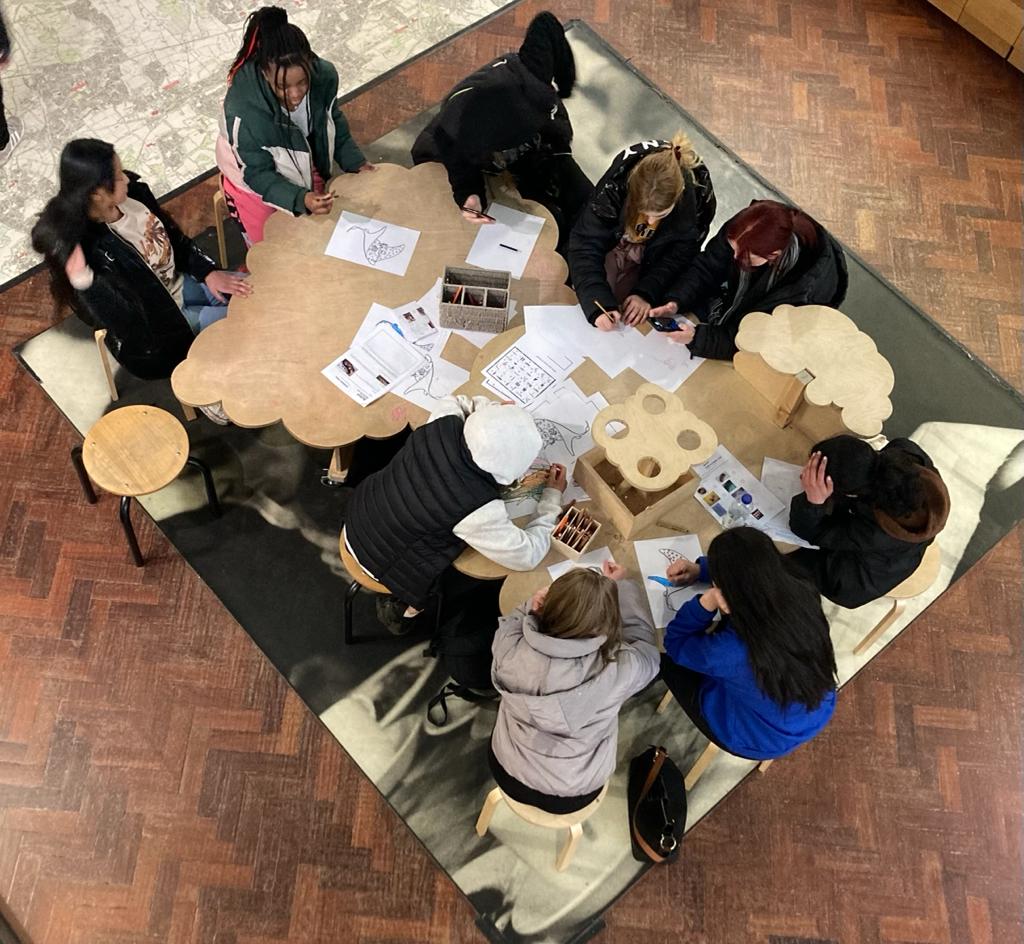
Over the last four years, we have worked with the Comino Foundation to create real world learning opportunities for our learners. Some of these have been extended projects that encompass all elements of Trivium learning and others have been shorter projects or one off events. The Comino projects have been brilliant; however, they have typically benefitted small numbers of learners at a time. We are now scaling these projects up to entire year groups, rather than individual classes of learners. The description of the ‘Bolton – Rewind – Regenerate?’ project is an example of this.
Another key step was developing a cohesive understanding of Trivium learning across all members of the senior team. To help achieve this, we had a weekend of experiential learning involving the poet Mike Garry and historian Andrew Davies. We learned from experts, produced our own poetry and had to communicate our learning to others. We were all out of our comfort zone, no one more so than me!!!
Less adventurous than a weekend with Mike Garry, was restructuring our curriculum to revert to a three year Key Stage Three. The additional time at Key Stage Three enables us to learn at greater depth through a Trivium approach. We have also re-organised the school day to move away from 50 minute lessons (it was only 40 minutes on a Tuesday!) to 60 minute lessons. There are some double lessons within the timetable, giving an extended chunk of time to take time over the learning process.
Changes to Key Stage Three certainly helped during our recent Ofsted inspection. There are valid concerns about the impact of the cliff edge accountability we have in UK schools; however, we did manage to use feedback from Ofsted from our 2021 inspection to accelerate some of our changes to curriculum structure, and to inform our knowledge mapping. Generally, a Trivium approach aligns well with the new Ofsted framework, which focuses on teaching for understanding, learning in greater depth and personal development. There are understandable frustrations across schools in the variability of judgements of individual inspectors but, overall, the current Ofsted framework is a step in the right direction towards a more holistic educational experience.
In the last blog, I referenced the difference between Everyday Trivium and Trivium Projects. Most of the learning is far closer to Everyday Trivium rather than Trivium Projects. We have no set proportion of each that we want for the future (is it 50:50 or 80:20 to Everyday:Project – we don’t know yet!). There is both more Everyday Trivium and Project Based Trivium than ever before, and the quality is generally higher than previously, but we are still years from where we want to be. One whole year group project that demonstrated real improvement from previous exhibitions of learning was the Holocaust Memorial project with Year 9, which culminated in a brilliant exhibition earlier this year.
One of the next steps is to better connect the Trivium training so the pillars are less discrete. The separation helped to provide some early momentum but could be limiting the cohesive vision and implementation of Trivium learning.
Some of the things that we do differently as a school are about pedagogy and others are about relationships. It is difficult to disconnect these… If you are teaching in a traditional, teacher-led manner, the relationships are likely to be pretty traditional too. Equally, if you’re adopting a more progressive approach, with learners taking more responsibility for their own learning, it’s likely to involve a different type of relationship between teacher and learner. Likewise, leadership needs to be different if you are adopting a more expansive approach. Future blogs will explore relational aspects to learning, dimensions of leadership and our innovative personal development programme.
Written by Paddy Russell

 The Ladybridge Trivium - Knowledge | Exploration | communication